
.webp)
Choosing a broker brings access to qualified buyers and helps with pricing accuracy. Research shows owners who sell with a broker often achieve 15%–25% higher sale prices than those who sell on their own, thanks to better valuation and competitive buyer access. That support can cut deal risk and protect confidentiality during outreach. Handling the sale directly can save commissions and give more control, but it raises risks like mispricing, limited reach, and legal or tax mistakes.
The choice between professional help and a direct sale hinges on time, reach, and risk tolerance.
Selling a company usually takes 10–12 months and involves many steps. Some extend longer when documentation is incomplete or buyer financing is slow.
DIY paths can vary widely, often three to twelve months or more if outreach is limited.
Broker commissions typically range from 5%–15%, based on deal size and structure. Those fees buy access to vetted buyers, confidential marketing, and negotiation support.
Net outcome framework: compare likely proceeds after fees against risks like mispricing, fewer offers, and longer time on market. If speed, confidentiality, and negotiation help matter most, broker engagement can outweigh costs.

A strong sales process starts long before any public listing and relies on disciplined project management. Business brokers act as strategists and project managers, guiding preparation, outreach, and closing tasks.
Valuation relies on cash flow analysis, risk assessment, and comparable sales in the market. A business broker builds a credible price range that sets expectations for serious buyers.
Confidential marketing materials highlight strengths without exposing sensitive information. NDAs protect detailed information, while targeted outreach contacts buyers in an established network rather than broad public postings.
Brokers vet potential buyers for fit and funding so owners focus on qualified leads. They manage inquiries, schedule meetings, and handle due diligence requests to limit operational disruption.
During offers and term talks, the business broker frames price, payment structure, contingencies, and transition plans. Coordination with attorneys, accountants, and other advisors reduces closing risk and keeps negotiations professional.
Comparing an intermediary-led path with an owner-led sale highlights practical differences that affect outcomes. Below are clear factors that change timing, reach, and risk during a sale.
Direct owners act fast and make immediate calls. That speed helps when an efficient closing matters.
Intermediary-led processes add structure. That cadence prevents rushed choices and keeps milestones on track.
Intermediaries bring a wider network and curated buyer lists. More qualified buyers often creates competitive tension and better offers.
Independent outreach limits exposure mainly to personal contacts and local buyers.
Formal marketing materials, polished financial packages, and third-party representation raise perceived quality.
Buyers often view that professionalism as reduced risk and may justify higher pricing.
Intermediaries manage NDAs and staged information releases. That reduces leaks affecting staff, customers, and competitors.
Direct sales risk accidental disclosures unless strict controls are implemented.
Contracts, disclosures, licensing, and tax items create heavy admin work. Intermediaries coordinate these flows and timelines.
Owners handling paperwork face higher operational strain and greater error risk.

An experienced intermediary brings market data and process discipline that lift deal outcomes.
Valuation work starts with cash-flow analysis and comparables. This data-driven price avoids overpricing that scares buyers and undervaluation that leaves money on the table.
Access to a wider network creates more qualified buyers and more competitive offers. That volume gives leverage when selecting not just the highest price but the best overall terms and fit.
Brokers understand buyer tactics and defend value using market evidence. They guide discussions on structure, seller financing, earnouts, contingencies, so terms align with seller priorities.
By handling inquiries, scheduling, and repeated Q&A, brokers free owners to focus on operations and preserve business momentum during the sale window.
Coordination with accountants and attorneys keeps diligence organized. That reduces post-closing disputes tied to incomplete disclosures and lowers overall risk.
Practical benefit: a smoother process protects momentum and raises the odds of closing on acceptable offers.
Hiring a professional intermediary adds clear costs and trade-offs that deserve careful review. Expect a success-based commission commonly in the range of 5%–15%, with many deals falling between 5%–10%.
Fee arrangements vary. Common models include a closing success fee, a retainer for upfront work, and occasional marketing or admin charges. Clarify what expenses are included before signing an engagement letter.
Valuation reports, accounting reviews for due diligence readiness, and legal fees for purchase agreement review are frequent line items. Accounting work can run from a few thousand dollars to tens of thousands depending on ledger complexity and audit depth.
Misaligned incentives can push pricing or buyer targeting away from an owner’s priorities. Limited familiarity with a niche industry may weaken presentation and harm outcomes.
Treat hiring as a vetting exercise: ask for relevant deal experience, a clear marketing plan, and defined communication expectations from any professionals under consideration.
An independent sale route can expose owners to pricing errors, limited reach, and legal exposures. These risks often cut net proceeds and extend the timeline.
Mispricing is the biggest financial threat when you sell business independently. Overpricing repels buyers; undervaluation permanently lowers proceeds. Lack of market data and emotional bias create gaps that buyers spot during diligence and challenge hard.
Without broker channels and buyer lists, outreach depends on personal networks. That limits contact with capital-ready and strategic buyers, reducing competitive tension and offer quality.
Experienced buyers use tactics on price, contingencies, and timelines. Owners often concede terms that carry long-term costs when no experienced negotiator represents them.
Missing disclosures or tax errors can create post-close claims and unexpected liabilities. Professional coordination lowers this risk.
Time Impact: DIY sales often take 3–12 months or longer and pull focus from operations. Falling performance during that period can lower buyer confidence and price.
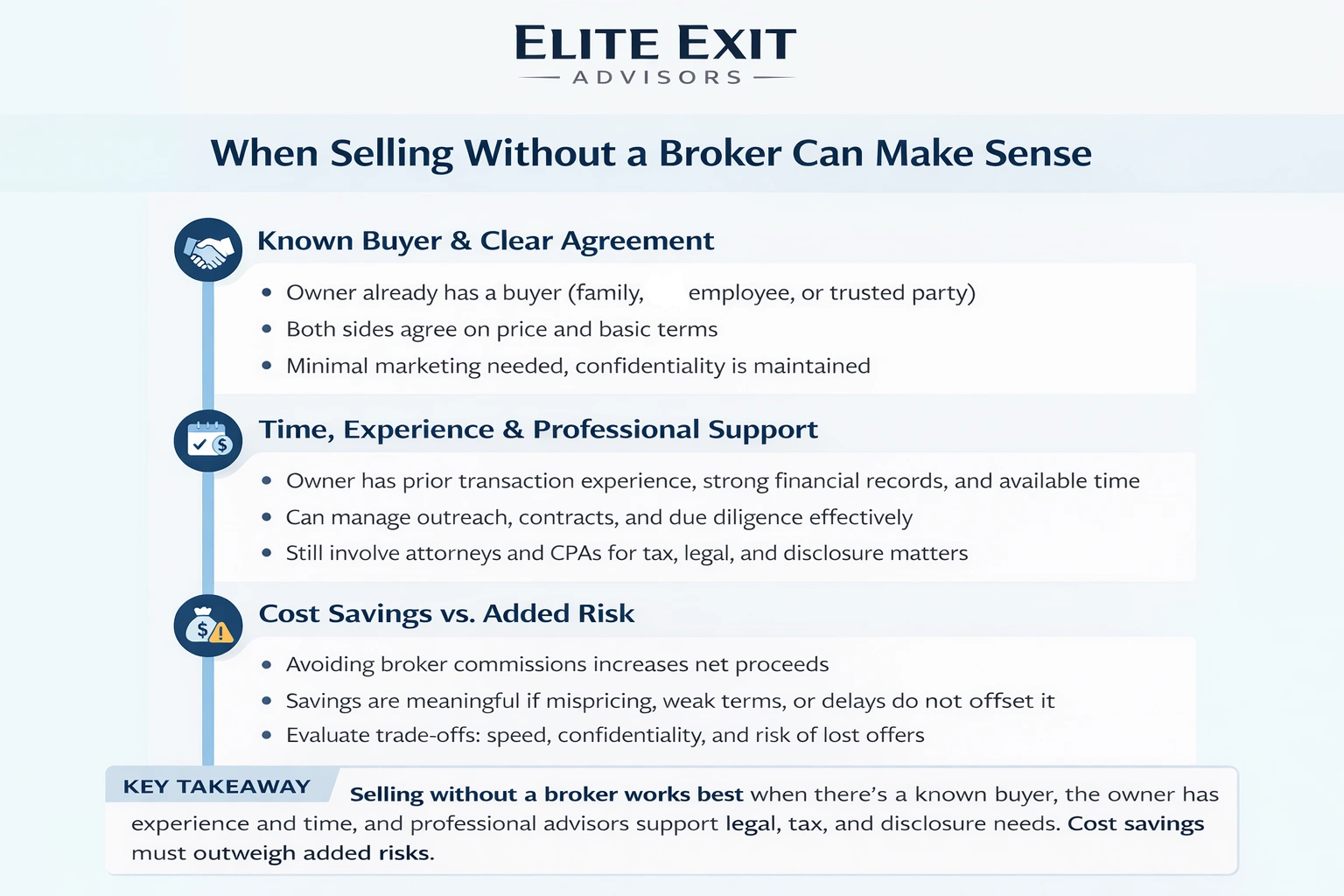
If an owner has a known buyer and clear terms, a private exit can be efficient and practical.
When a family member, employee, or trusted party is the buyer and both sides agree on value, outside representation adds less incremental benefit.
Clear price and basic structure cut marketing time and protect confidentiality.
Owners with prior transaction experience, solid records, and available time can manage outreach, contracts, and due diligence.
Even then, involve attorneys and CPAs. Skilled professionals and advisors handle tax planning, disclosures, and legal risk.
Avoiding commission fees raises net proceeds. That gain is real if mispricing, weak terms, or delays do not offset it.
Weigh cost against potential lost offers, extended timelines, and other risk drivers.
Buyers expect clear valuation logic; that clarity speeds financing and reduces late-stage disputes. Recognizable methods make offers easier to underwrite and make due diligence smoother.
The income method ties price to cash flow and profitability. Analysts project future earnings and adjust for stability, growth, and risk.
This approach is common for service firms and companies where ongoing profits matter more than assets.
The market method uses recent comparable sales and current demand to set a realistic range. It shows what actual buyers pay in similar deals.
This approach helps defend pricing during negotiations and aligns expectations with the market.
Asset-based valuation totals tangible assets minus liabilities, then adds key intangibles like patents, customer lists, or proprietary processes.
For asset-heavy firms the asset view matters most; for others intangibles and cash flow drive final value.
Mapping each phase of a broker-managed process makes expectations and costs easier to compare. This overview shows what owners pay for when a professional engagement begins and how work flows from prep through close.
The first phase focuses on assembling clear financials, normalizing earnings, and building the company story buyers underwrite. Clean numbers and a sharp narrative reduce questions during diligence and clarify value.
Marketing runs in stages. High-level summaries go out first. Detailed information is shared only after NDAs, which limits information leaks and protects staff morale.
Qualified buyer vetting filters funding, intent, and fit so outreach targets parties likely to make credible offers.
Professionals track offers and compare headline price against terms, timing, and contingencies. LOIs narrow the field and set the diligence timeline.
Requests escalate during diligence; organization matters. Coordinating accountants and attorneys keeps operations running while documents are reviewed.
Common negotiation points include payment structure, seller financing, transition training, working capital adjustments, and warranty limits. Skilled representation balances price against these elements to protect net proceeds and limit future risk.
At closing, alignment among lenders, landlords, attorneys, and escrow agents prevents last-minute delays. Active coordination reduces surprises and helps move the deal across the finish line on schedule.
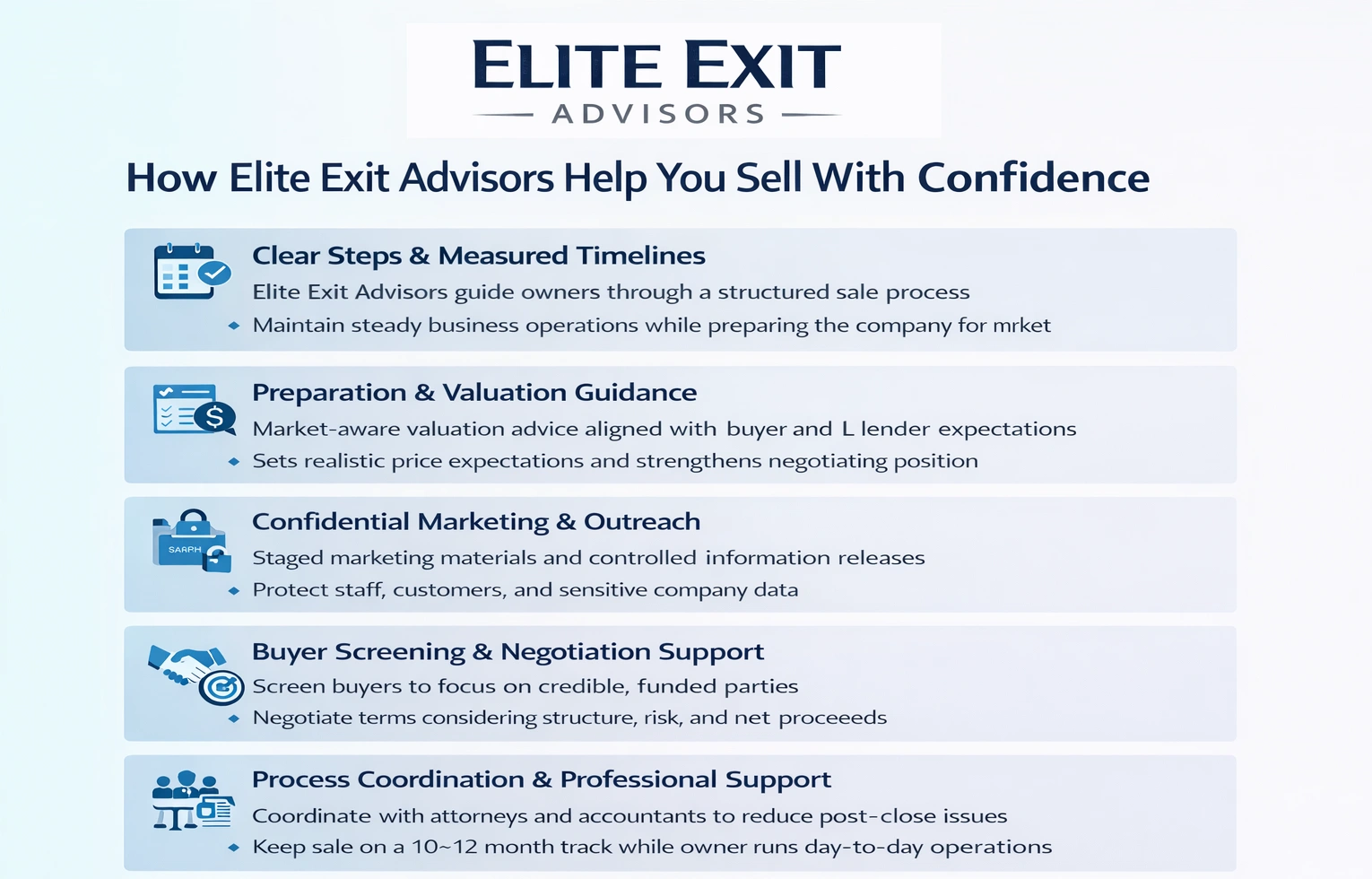
Elite Exit Advisors help owners move through a sale with clear steps, measured timelines, and hands-on support. The team focuses on keeping operations steady while preparing the company for the market.
Preparation and valuation guidance: Market-aware valuation advice that frames price in terms buyers accept and lenders underwrite.
Confidential marketing and outreach: Staged materials and controlled releases protect staff and customers during outreach.
Ready to explore next steps? Book a call and get a short plan that maps valuation, outreach, timelines, and key risks so you can decide with clarity.
Balancing net proceeds, confidentiality, and time commitments sets the path for a successful sale.
Pick the right way based on complexity, owner bandwidth, and how vital maximizing price and terms is versus saving fees. Expect most sale business processes to take six to twelve months; that time is a real cost.
Top reasons to work with a broker include valuation discipline, access to qualified buyers, negotiation strength, and process control that cuts risk. Top reasons for an independent route are maximum control and fee savings when a known buyer and strong advisors exist.
Choose by net results, not headline commission. Prepare information early, protect confidentiality, screen buyers carefully, and treat the transaction like a project. When help is needed, Elite Exit Advisors and the team provide services that align industry know‑how with clear steps.