
.webp)
Selling a business in the United States often leads owners to ask one simple question: how long does it take to sell a company? The short answer: most deals land near the 10–12 month mark, but outcomes range from a few weeks up to more than a year based on preparation and buyer readiness.
This introduction outlines the full timeline we measure: not just time on market, but the entire process from prep through closing. Expect months, not days; speed usually trades off against negotiation leverage and risk.
The checklist for selling a business includes preparation, outreach and marketing, buyer selection, LOI negotiation, due diligence, financing, legal work, and closing. Owners who present clean financials and organized documents often move faster.
This guide focuses on practical, present-tense steps owners can use to reduce friction and avoid avoidable delays. Later sections offer benchmarks and a stage-by-stage timeline so you can plan around meetings and information requests.
A realistic sales calendar for U.S. businesses spans a wide range depending on readiness and buyer demand. Owners should expect active bursts of work and quiet stretches. Clear records, realistic pricing, and early diligence prep shorten the path.
Very clean deals with ready buyers can close in several weeks, but those are uncommon. More often, delays in valuation, financing, or negotiations push the process past a year.
Across the United States, a common end-to-end benchmark is about ten to twelve months. This includes prep, outreach, offers, diligence, and closing work. Use this span for planning multi-quarter exits.
“Time on market” refers only to the listing and active buyer outreach window. The full timeline also counts prep before listing and legal, financing, and closing work after an offer. Those outside steps often add significant time.

Transaction databases show the typical active market window for many sellers. BIZCOMPS data since 2000 reports an average time on the market of about 200 days, roughly 7.3 months. That figure captures the listing period and active buyer outreach, not the full exit calendar.
Market time excludes prep work, LOI negotiation, deep due diligence, financing, and final legal steps. Add those phases and the end-to-end sale often stretches to about 10 months or more.
Use the 200-day figure as one planning input, not a promise. If buyer confidence falls because records arrive late or differ from claims, deals pause. The best forecasts come from mapping each stage and assigning time boxes.
Break the sale into clear stages so owners can see which steps drive the calendar. Each stage overlaps at times, and small delays add up. Below are the common stages, their typical ranges, and practical actions to keep momentum.
Do valuation work, craft the CIM, and assemble key documents. This stage is the most controllable. Solid preparation reduces questions later and speeds diligence.
Marketing includes teasers, outreach, calls, and management meetings. Expect multiple rounds of Q&A and collection of indications of interest. Broad outreach widens the buyer pool and shortens search time.
Due diligence equals verification, not discovery. Fast replies and organized documents cut back-and-forth. Closing involves legal drafts, exhibits, consents, and funds transfer.
The LOI sets price, terms, exclusivity, and diligence scope. Negotiation often takes a month or more as parties refine the agreement and clear conditions precedent.
A mix of owner choices and market forces determines the pace of a sale. Review controllable levers separately from external conditions so you can act where it matters most.
Deal size and complexity also matter: higher value transactions require deeper diligence and more legal work, which expands the calendar. Focus first on price realism, rigorous preparation, and an effective outreach plan to reduce unnecessary delays.

Pricing choices shape buyer interest and often set the pace of a sale. A clear, defendable value makes more buyers act quickly. Misaligned expectations push outreach into repeated rounds and add months.
Set realistic value and cross-check market comparables, earnings quality, and risk points. Normalize earnings, document add-backs, and note customer concentration before listing.
When asking numbers sit far above what buyers expect, interest falls and negotiations restart with each new party. Data shows larger asking-vs-selling gaps correlate with market time rising from about 203 days up toward 285 days.
Buyers think in SDE or EBITDA multiples. Unrealistic multiple demands often produce stalled interest for months because financiers and strategics reject the premise early.
Smart marketing cuts wasted calls and brings more credible offers into view. Targeted outreach increases qualified buyer volume. That shortens the path from inquiry to a credible offer while reducing unproductive conversations.
Describe core value drivers, known risks, and upside levers in plain terms. Buyers want a simple narrative they can assess quickly.
Flag the top three diligence items buyers will check. That reduces repeated questions and rebuilds trust faster.
Use staged sharing: teaser → NDA → CIM and management call → data room access. This sequence protects operations while letting qualified prospects dig deeper.
Controlled information preserves employee morale and customer confidence during the selling business process.
Centralize buyer requests early so the diligence phase moves faster. A proactive owner and an organized team cut needless back-and-forth. That preserves momentum and reduces risk of last-minute changes to the agreement and closing schedule.
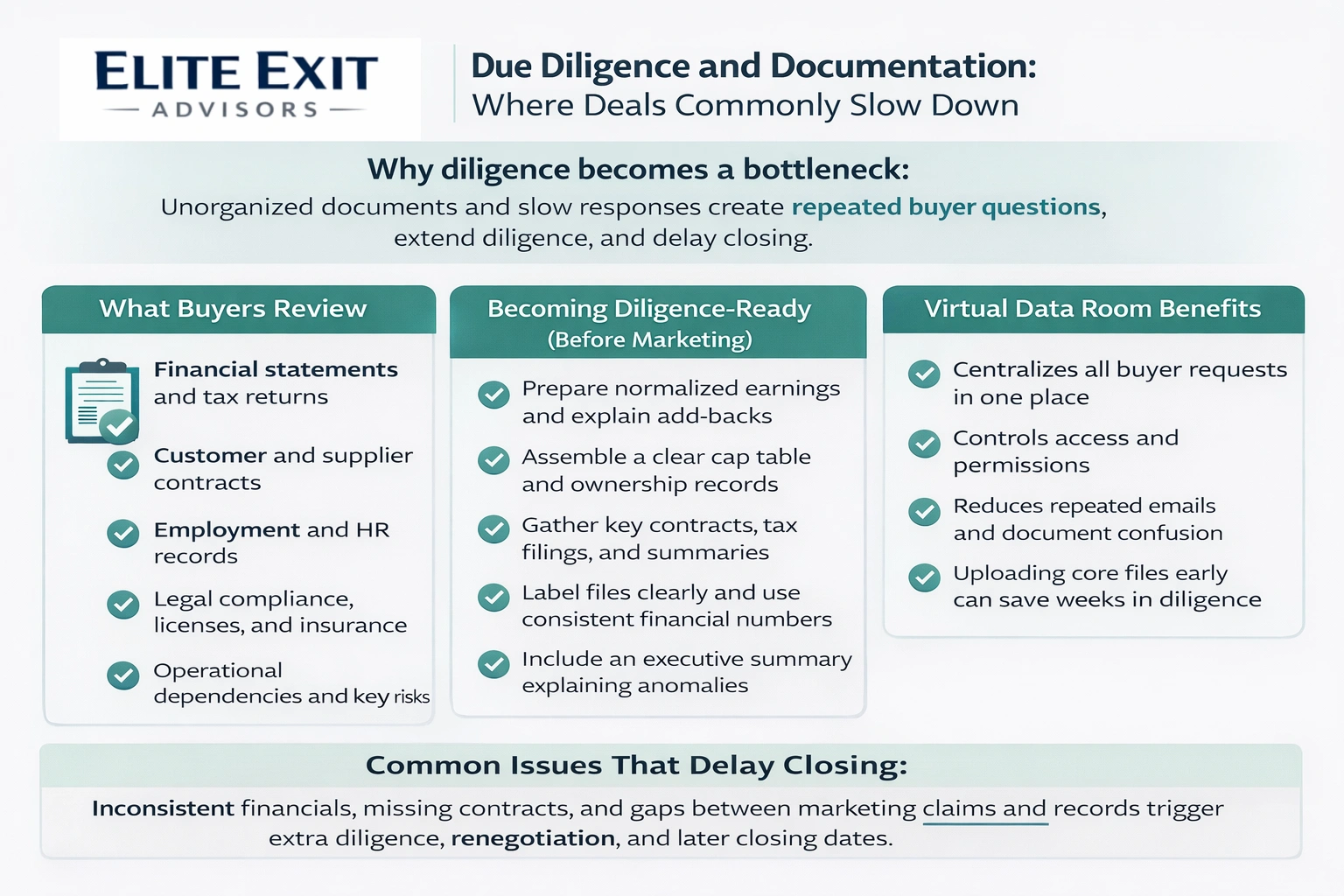
Buyers typically inspect financial statements, tax returns, customer and supplier contracts, employment records, and legal compliance. They also check operational dependencies, licenses, and insurance.
Create a clear document set before outreach. Include normalized earnings, cap table, key contracts, tax filings, and an executive summary that explains any anomalies.
A virtual data room centralizes information, controls permissions, and reduces repeated emails. Uploading key files early often trims weeks from the diligence process.
Inconsistent financials, missing contracts, and gaps between marketing claims and records trigger extra questions. Each inconsistency can push agreement drafting and closing dates further out.
Deal structure often sets the real speed of a transaction once price is agreed. Financing and detailed terms commonly add extra steps that stretch the closing calendar. Owners should plan for these bottlenecks early.
Underwriting and lender approvals require reviews, covenants checks, and legal documentation. That work commonly adds an extra 30–90 days before funds clear.
Even qualified buyers face paperwork and third‑party timing that stalls the process.
When a seller accepts flexible terms, more buyers qualify and fewer offers fall apart late. Waiting for a perfect, all‑cash bid can stretch the timeline by months.
Delays in business sales usually emerge from predictable sources that owners can control. Many stalls come from outside parties, missing files, or operational shifts. Identifying those points early prevents most slowdowns.
Attorneys, accountants, franchisors, and licensing bodies often have backlogs. That queue can hold up closing even when buyers are ready.
Unverified proof of funds, sudden lender demands, or changed terms derail momentum. These surprises commonly appear late in diligence.
Drops in sales, staff turnover, or missed targets invite renegotiation and extend the process. Maintain steady operations during the transition.
Mitigation: Assign an internal team lead, keep a consistent information cadence, and isolate sale-related activity from daily ops.
Speed is not rushing. It means removing predictable friction so sales, diligence, and closing progress without surprise pauses. The next section explains steps owners use to accelerate outcomes while protecting value.
Start with a tight, readable action plan that maps tasks, owners, and deadlines. That upfront clarity speeds decisions and keeps momentum during selling activity.
Commission an outside valuation that includes practical fixes. Use the report to set a defendable price range and prioritize improvements that raise value and shorten market time.
Lower perceived risk and document processes, diversify customers, and build management depth. Clear operational playbooks and transition plans attract faster offers.
Assemble financials, contracts, and cap table in a data room. Consider a QoE report when earnings need validation. Preemptive diligence cuts back-and-forth and saves months.
Understand earnouts, escrows, and financing basics so negotiations move faster. Maintain or improve revenue and margins during selling; steady results protect price and reduce retrades.
Fast-but-smart playbook: value check → exit plan → data room → term checklist → steady ops.
Elite Exit Advisors offers hands-on advisory that reduces friction across each sale phase. Advisors blend practical strategy with execution so owners face fewer surprises and keep momentum. The team focuses on realistic timelines and measurable steps.
Valuation alignment and positioning give buyers a clear reason to engage. Controlled marketing and targeted outreach widen the field of qualified buyers while protecting confidentiality.
Preparation and document readiness cut repetitive requests during due diligence. A disciplined data room and labeled files make verification faster and increase buyer confidence.
Advisory centers on managing the process end-to-end: screening potential buyers, coordinating diligence, and keeping legal and financing steps on track. Owners get weekly checkpoints and proactive issue tracking.
Elite Exit Advisors helps you move through a business sale with a clear plan, fewer surprises, and a timeline you can actually manage. Support can include:
.webp)
If you want a realistic timeline and an actionable path toward closing, book a call with Elite Exit Advisors.
Plan in months, not days: realistic expectations and early preparation set the pace for successful exits.
Most U.S. deals span several weeks up through a year or more. Market time often centers near ~200 days while the full sale process commonly reaches ten to twelve months.
Key stages that expand the calendar include valuation and pricing, buyer search and LOI negotiation, due diligence, financing, and closing execution. Focus your effort on controllables: clean documentation, steady performance, clear positioning, and realistic terms that match likely buyers.
Final takeaway: reduce friction before you go to market rather than rushing during diligence. Review readiness, map a timeline plan, and seek professional support if you want a smoother, faster outcome.