

Selling a company involves transferring ownership through a structured process that includes valuing the business, preparing it for sale, identifying and marketing to potential buyers, and negotiating terms.
A common question owners ask is how long does it take to sell a company. While timelines can vary depending on the industry, size of the business, and buyer interest, most transactions take around 10 to 12 months from start to finish. This period allows for careful preparation, including financial audits, operational reviews, and creating marketing materials that highlight the company’s value.
It also provides time for buyers to perform due diligence, secure financing, and finalize agreements, helping ensure the sale is completed smoothly and at a price that reflects the business’s true worth.
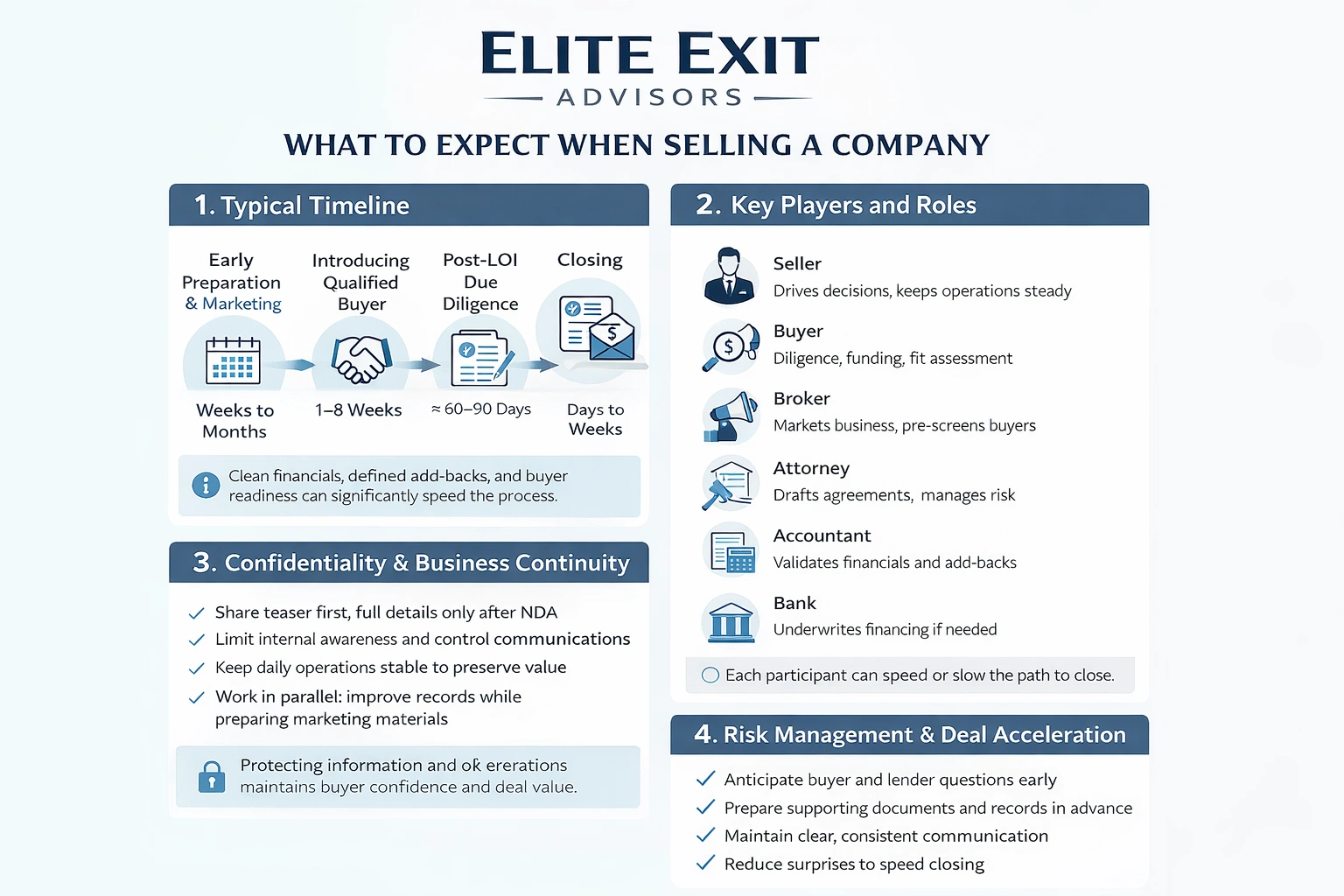
The process of selling a business in the U.S. generally follows a predictable timeline. Expect 10–12 months from early planning through closing. With strong records and clear goals, some sellers meet a qualified buyer in 1–8 weeks. After an LOI, due diligence commonly runs 60–90 days and closings may be in-person or virtual with wire transfers.
Speed depends on documentation, clarity, and buyer needs. Clean financials and well-defined add-backs shorten review time. If a buyer needs financing, underwriting at the bank can add weeks.
Each participant speeds or slows the path to close. Roles are clear and practical.
Protect identity with a short teaser first, then use an NDA before sharing sensitive information. Share full details only with qualified buyers to limit exposure.
Risk management wins deals. Anticipate buyer and lender questions early to reduce surprises and speed the path to close.
Deciding if now is the right moment to exit requires weighing personal goals against market signals. Test motivation: Are you driven by retirement, relocation, health, partner changes, or a new opportunity? Or is the goal to sell the business because performance recently peaked?
Assess emotional and practical readiness. Can you step away from daily control?
Decide if you will stay on after closing, and plan a transition that protects staff and customers.
Watch for consolidation trends, competitor acquisitions, and shifts in customer demand. These signs raise buyer appetite.
Q1 2024 showed about a 10% rise in small-business acquisitions, with more than 2,300 businesses sold for roughly $1.8B, evidence that market interest can swing quickly.
Use a simple framework:
Define your preferred buyer profile: an operator who will run the firm or a financial buyer focused on returns. Clear goals cut negotiation drift when multiple offers arrive.
Remember the tradeoff: waiting may raise price but costs time and risk. Even if you’re not ready now, begin readiness work to keep options open.
Prepare clear, verifiable records now to minimize questions during buyer review. Buyers expect tidy numbers and quick access. Gather core reports and create simple reconciliation notes that explain variances.
Provide three years of tax returns plus a year-to-date profit and loss and balance sheet. Include reconciliation notes that tie tax figures to internal numbers.
Document owner income and common add-backs with support. Clear add-back explanations reduce buyer pushback on valuation and speed negotiations.
Fix inconsistent categories, clean payroll records, and match bank deposits to revenue. Document unusual or one-time costs so they do not trigger more questions during review.
Organized information lowers perceived risk and often improves terms, fewer contingencies and faster closing. Build a permissioned data room so sharing is tracked. Resolve red flags early: missing contracts, unclear inventory, or mismatched tax versus internal figures.
Understanding how potential buyers set value helps owners target realistic expectations. Buyers focus on risk, repeatability of earnings, and how tied results are to the owner. That view shapes offers and negotiation strategy.
This method lists tangible assets minus liabilities. It suits equipment-heavy or inventory-intensive firms. Buyers check condition, title, and liens to determine net worth.
Buyers often use normalized cash flow times a multiple (many small businesses trade near 3–6× current cash flow). Clean add-backs and steady margins push the multiple higher.
Advisors and buyers look at recent sales of similar firms. Similar must match industry, size, margins, and geography to be meaningful.
DCF models forecast growth and discount for risk. Use when there are credible expansion plans or uneven earnings.
Practical improvements now can make your business more attractive and widen market interest. Focus on fixes that buyers can verify with documents, not promises. The goal is higher margins, lower risk, and clearer metrics that speed any future deal.
Target margin gains and cut recurring waste, enforce pricing discipline, and renegotiate vendor terms. Document each change with before/after reports.
Standardize workflows and set a reliable reporting cadence so performance is repeatable without owner intervention.
Replace dependence on one or two accounts and expand channels, add recurring offerings, or cross-sell to existing clients. Track revenue by customer and set thresholds to show reduced concentration.
Close open claims, validate licenses and permits, and fix employment practice issues. Register trademarks or confirm ownership of key IP.
Document resolutions so buyers see lower deal risk and fewer last-minute price cuts.

Different sale routes fit different owner goals: speed, maximum price, or minimal disruption.
A direct sale can work if you have a clear buyer pool and strong network. It gives the most control and can cut fees, but owners often underestimate negotiation, documentation, and confidentiality needs.
Hiring business broker support adds reach and keeps momentum while you run operations. A business broker packages the offering, markets to vetted buyers, screens inquiries, and coordinates offers through close.
Marketplaces offer broad exposure and lower upfront cost. Expect more outreach and the need for extra screening. Confidentiality is harder to protect without careful teasers and NDAs.
Auctions create competition and speed. They can deliver strong results when buyer turnout is high. The risk: low participation can push the final figure below expectations.
Crafting clear, confidential marketing materials helps attract the right buyers while protecting sensitive operations. Start with a one-page teaser to spark interest without revealing names, exact location, or client lists. Require an NDA before sharing the detailed information memorandum.
Keep the teaser high level. Include industry, general geography, and an indicative financial range. Add a concise investment thesis that explains value without naming staff or customers.
The CIM should tell the business story, show verified financials, and outline growth levers. Provide customer mix, team structure, and operational metrics. Give enough to assess fit while withholding direct identifiers until qualification.
Emphasize systems, contracts, and market positioning with proof points buyers can verify later. Describe team depth and roles without personal identifiers to keep morale stable.
Protecting confidential details while vetting interest keeps operations steady and value intact. Start with a short teaser and require signature of an NDA before sharing sensitive material. This step limits exposure and signals seriousness.
Trigger NDA signing after the teaser review and a basic background check. Even with an NDA, keep highly sensitive information staged and restricted.
Use a simple checklist to screen potential buyers: industry experience, operational skills, timeline, and capital availability.
Limit internal disclosure to a small, trusted core and delay staff announcements until closing is likely. Time introductions to customers and vendors only when needed to confirm continuity.
Discipline in screening and staged disclosure preserves leverage and reduces the chance of late-stage retrade or leaks that harm staff or business relationships.
When multiple proposals arrive, owners must judge risk, certainty, and timing, not just headline numbers. Use a simple scorecard to compare offers and preserve negotiating power.
Score each offer on headline price, cash at closing, contingencies, diligence length, and time to closing. Weight items that matter to you, cash now normally scores higher than contingent payouts.
Ask for proof of funds or lender commitment letters early. Check assumed financing timelines and underwriting conditions to gauge closing probability.
Clarify which assets transfer: equipment, inventory, and intangible rights. Agree on inventory valuation method and receivable treatment before final drafting.
Define training duration, consulting fees, and clear end dates for any retained role. If you will be employed post-close, state scope, compensation, and termination triggers.
Leverage protection tactics: keep buyer competition alive, avoid oversharing urgency, and document agreed commercial points early so the legal agreement mirrors the deal terms.
Once major terms are agreed, the next phase tests facts behind the offer and timings. An LOI captures core terms so teams can focus on verification rather than re-negotiation.
Purpose: state price range, major deal structure, key inclusions, and a target timeline. It creates the baseline for lawyers and accountants to start work.
Exclusivity: helps speed review but can reduce seller leverage if the buyer drags. Limit exclusivity by calendar days and milestones, and require progress reports.
Attorney role: mark representations, spot transfer risks, draft the agreement, and limit open liabilities.
Accountant role: validate earnings quality, reconcile add-backs, and flag working capital swings or anomalies.
Bank / lender: underwrite collateral, require supplemental documents, and can add 2–6 weeks if packages are incomplete.
Prepare for diligence questions with concise, indexed documents and a consistent narrative. Late issues often cause price adjustments, escrow holds, or timeline extensions, clear files reduce those risks.
Closing stitches together negotiated terms, last checks, and the mechanics that move funds and title. The purchase agreement converts negotiated business points into enforceable obligations and allocates risk between buyer and seller. Attorneys usually draft and refine this contract after due diligence so the language matches what both sides agreed.
Understand these core items before signing:
Closings in the United States often occur in an attorney’s office or virtually. Expect a final signature session, wiring of funds, and confirmation emails or bank receipts.
Common closing documents include:
Tax treatment can materially change net proceeds. The structure of the transaction, asset sale versus equity transfer, affects tax bills for both buyer and seller. Plan tax strategy before signing to avoid surprises at closing.
Keep operations steady through closing. Strong final month performance reduces leverage for last-minute renegotiation and supports the representations already made.
What “closed” means: ownership transfers, funds are received per the agreement, and post-close obligations are tracked under the contract and any escrow or indemnity mechanics.

At Elite Exit Advisors, we guide owners through targeted preparation, buyer screening, and transition planning so deals finish on schedule. The goal is steady operations and fewer surprises during the selling business journey. Our work reduces common friction that slows or derails a deal.
Result: faster review, fewer renegotiations, and smoother business sales outcomes. If you want help timing readiness and shaping your next steps, book a call to discuss timing, readiness, and next steps.
Summarize the key step flow and make a 30–60 day action list to reduce risk and keep momentum.
Recap: decide timing, prepare financials, set valuation expectations, pick a sale path, market confidentially, qualify buyers, negotiate offers, execute LOI and diligence, finalize documents, and reach closing.
Preparation matters. Clean records, clear add-backs, and organized files speed review and cut renegotiation risk for seller and buyer.
Protect value with staged disclosures, NDAs, and tight coordination with staff and vendors. Time to close often hinges on responsiveness, financing readiness, and how well diligence is managed.
Next step: list readiness gaps, assign owners, and set target dates. For structured support, contact Elite Exit Advisors to map priorities and reduce friction before market outreach.