

A business broker is a trained intermediary who manages every phase of a sale, from accurate valuation and confidential marketing to negotiating terms, guiding due diligence, and coordinating closing logistics, so owners and buyers avoid costly mistakes and unnecessary risk. The global business broker service market was valued at approximately $7.6 billion in 2025, and continues expanding as more owners seek professional support for complex transactions.
Business brokers begin work well before any public exposure, preparing normalized financials, crafting compelling deal narratives, and identifying buyers with both the financial capacity and strategic fit. They protect sensitive information through staged disclosures and NDAs and keep sales discreet to prevent operational disruption. Through structured negotiation and deal management, brokers help sellers maximize not just price but key terms like financing, contingencies, and transition planning, and help buyers evaluate fit, pricing, and risk efficiently.
Selling or buying often needs an expert intermediary to keep the process confidential and on track. Business brokers act as intermediaries who connect buyers and sellers and handle valuation, marketing, negotiation, and closing coordination.
These professionals manage the end-to-end transaction. They prepare summaries, screen prospects, and protect sensitive details while presenting value to vetted buyers.
Main Street specialists focus on owner-operated, local or regional firms, often below roughly $1M. M&A advisors target larger, more complex deals and institutional buyers. The crossover range rewards broad experience and process discipline.
Unlike real estate agents or estate agents who list properties publicly, sales of operating firms sell cash flow, operations, goodwill, and risk. Confidentiality is foundational.
A focused intermediary aligns price, confidentiality, and buyer qualification so deals progress smoothly. This section explains practical steps taken from valuation through closing in U.S. sales.
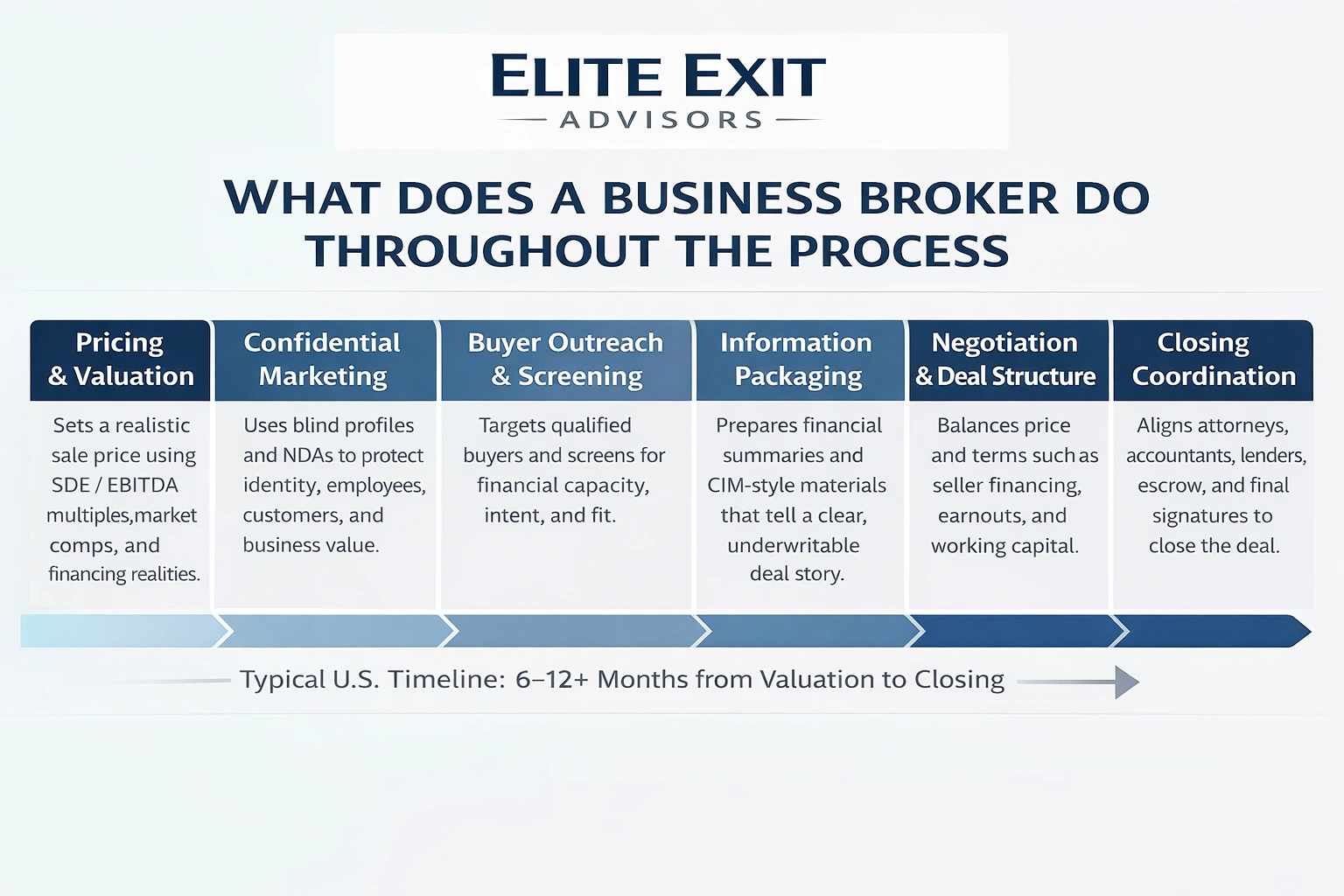
Brokers use earnings-based methods, SDE or EBITDA multiples, plus market comps and deal realities to set a defensible sale price. They adjust for financing limits and buyer appetite to avoid leaving money on the table.
Marketing relies on blind profiles that hide identity until an NDA is signed. Controlled information flow protects staff, customers, and value while still attracting interest.
Outreach uses broker networks and curated databases beyond public listings. Screening confirms financial capacity, intent, and fit to filter out tire kickers.
Prepare normalized earnings, concise financial summaries, and CIM-style materials that tell a clear deal story buyers can underwrite.
Negotiations balance price and terms. Common tools include seller financing, earnouts, and working capital clauses. The intermediary keeps discussions objective and focused on outcomes.
Anticipate document requests, organize records, and flag risks early to keep momentum and reduce buyer drift during due diligence.
Coordination aligns attorneys, accountants, lenders (including SBA-style lending), escrow, lease transfers, and final signatures so transactions close cleanly.
Most U.S. deals span ten to twelve months because financing, due diligence, and legal work require time. Complex operations or lease transfers can extend schedules.
Early preparation and controlled outreach keep performance steady and value intact during a sale. Skilled advisors let owners run daily operations while they handle the sale tasks that would otherwise distract management.
Protecting ongoing results matters. Brokers organize clean financials, document add‑backs, and review customer concentration so owners do not need to step away from work.
Brokers highlight recurring revenue, growth levers, defensibility, and management depth to boost perceived value beyond raw numbers.
They also fix weak spots, margin swings, owner dependence, or sloppy bookkeeping, so issues don't hit price or terms late in the process.
Confidentiality is enforced through staged disclosures, NDA gating, and need‑to‑know sharing. These controls limit leaks and keep operations stable.
Maintaining confidentiality preserves leverage during negotiations as it allows multiple buyers to compete and prevents premature customer or staff disruption.
Maximizing value means more than a headline price. The right advisor improves deal terms, stronger deposits, tighter contingencies, and clearer timelines, to increase success and lower seller risk.
Buyers get better deals when sourcing starts with clear criteria and trusted networks. Before outreach, a broker helps define industry, geography, budget, risk tolerance, and the buyer's desired role. This sharpens searches and saves time.
Experienced brokers tap confidential networks and targeted lists that sit outside public ads. That access uncovers opportunities where sellers prefer limited exposure.
Brokers review revenue quality, customer concentration, owner dependence, competition, and operational complexity. They help buyers gauge real value and calibrate the asking price against earnings and comps.
Advisors craft LOI components, deposit logic, and sensible exclusivity windows so offers compete without overexposure. They also explain lender options, conventional versus SBA-style, and how structure affects approval.
Compensation models and state rules determine how intermediaries are paid and regulated in U.S. transactions. Read the contract carefully so there are no surprises at closing.
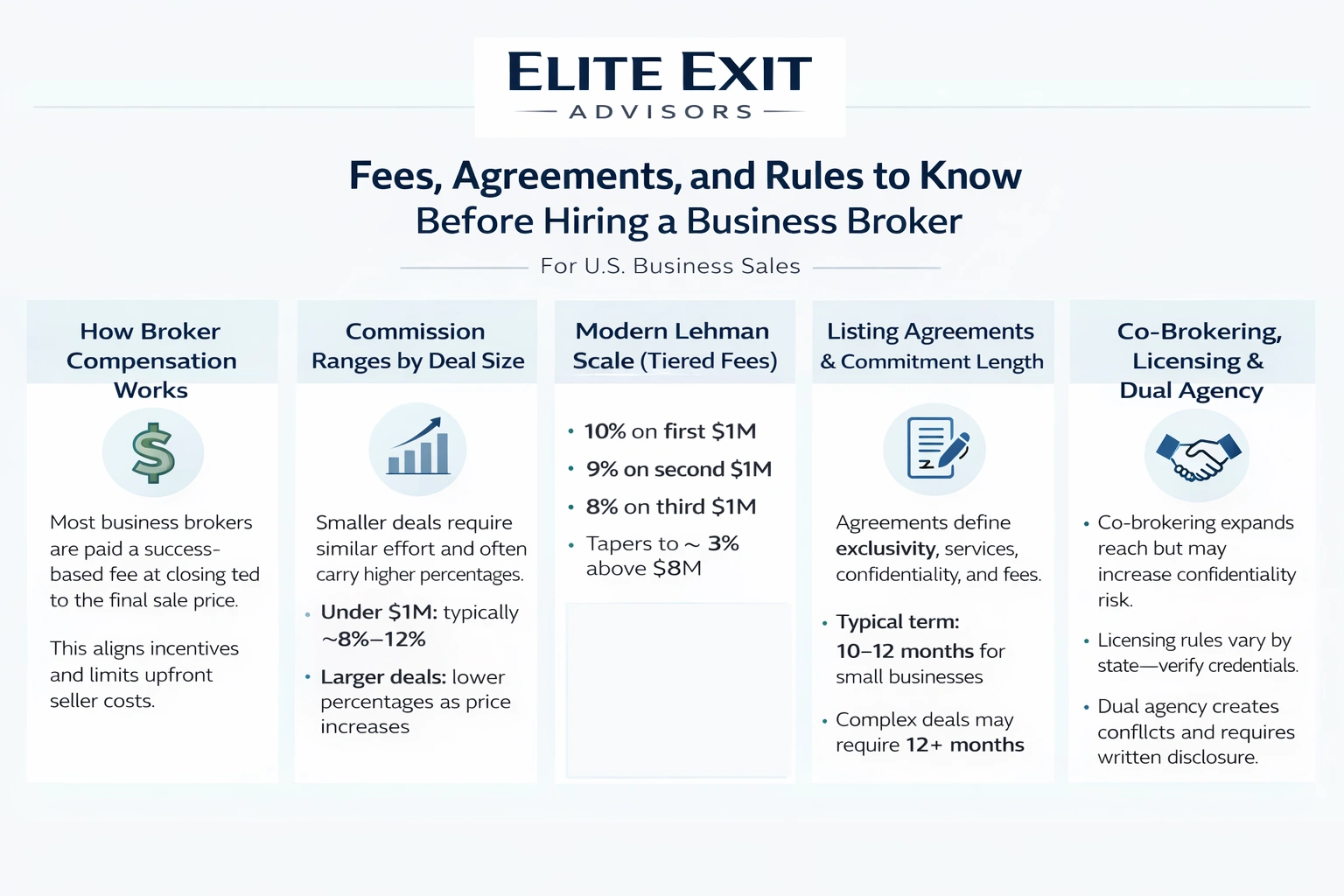
Success-based fees are standard: the fee is paid at closing and tied to the final sale. This aligns incentives and limits upfront cost for sellers.
Smaller deals often carry higher percentages because effort does not scale down. For businesses under $1M, expect roughly 8%–12% commission.
As sale price rises, percentage rates fall to reflect larger absolute payouts and different buyer pools.
The Modern Lehman Scale stages commission by tranches to keep fees reasonable on larger deals.
Listing agreements usually cover exclusivity, scope of services, confidentiality rules, and the fee schedule. Small-company terms often run 10–12 months.
Larger or more complex transactions commonly require one year or more due to financing and due diligence timelines.
Co-brokering happens when two agents split commission. That can expand reach but may risk leaks; sellers sometimes limit co-brokering for confidentiality.
Licensing varies by state; verify credentials and registration before signing. Rules affect how intermediaries may advertise and execute transactions.
Dual agency, representing both buyer seller parties, creates conflicts. Require written disclosure, narrow duties, or separate representation to protect interests.
Pick an advisor who fits your deal size and industry niche. That match drives buyer outreach, valuation assumptions, and the story buyers will underwrite. Look past glossy testimonials and test for measurable outcomes.
Ask for sold rate, average time to close, and recent closings in your transaction size band. Request examples in your industry to confirm relevant experience.
Check for voluntary credentials and memberships such as CBI or IBBA. These signal formal training, ethics, and adherence to process discipline.
Watch for red flags: vague process descriptions, unrealistic pricing promises, or reluctance to clarify fees and representation. Align on priorities, value versus speed, tolerance for seller financing, and desired transition involvement.
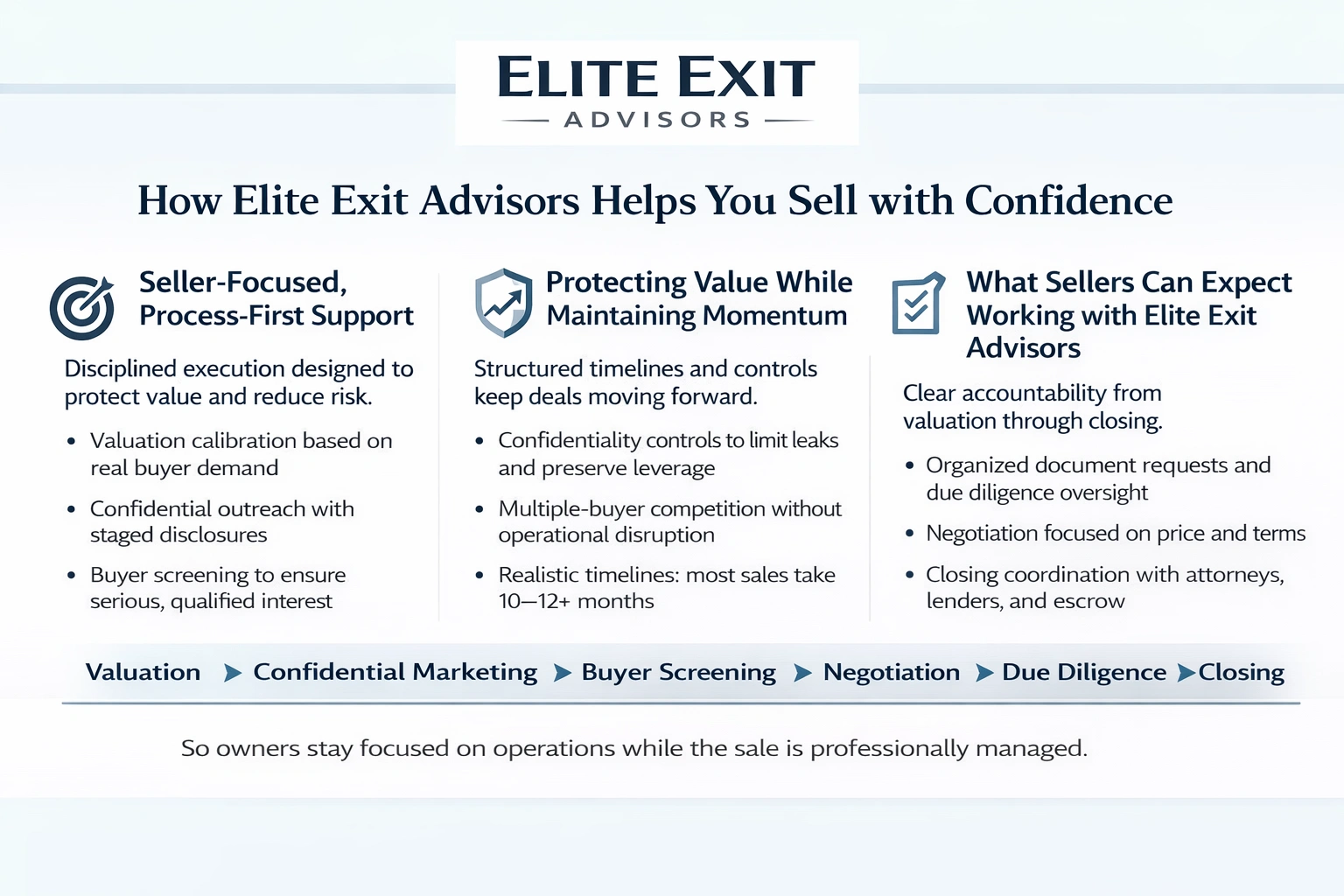
Elite Exit Advisors combines disciplined process management with hands-on execution to protect value and move deals forward. The firm focuses on practical steps, valuation calibration, confidential outreach, buyer screening, negotiation support, due diligence oversight, and closing coordination, so owners stay focused on operations.
Work is staged to limit leaks and preserve leverage. Confidentiality controls and staged disclosures keep staff and customers insulated while multiple buyers compete.
Timelines reflect real-world timeframes. Most sales take ten to twelve months or longer; planning for that span preserves momentum and reduces surprises.
Expect clear accountability, organized document requests, and structured buyer qualification. Negotiations emphasize price plus terms, reducing avoidable concessions.
Ready to review your situation? Book a call to discuss valuation, timing, and next steps. Elite Exit Advisors will outline a tailored plan and timeline to help you pursue a smooth, successful sale.
Process-first discipline protects value while guiding pricing, staged marketing, buyer screening, negotiation, due diligence, and closing.
An effective broker and supporting team deliver financial rigor and strict confidentiality that set these deals apart from typical real estate transfers. That care reduces surprises and preserves leverage for sellers.
Expect most U.S. sales to take ten to twelve months or longer. A disciplined process helps avoid delays and improves the odds of a smooth transaction and eventual success for both buyers and sellers.
Use the selection criteria, fee guidance, and engagement terms outlined earlier to choose advisors who match your size and goals before committing to any listing or offer.